Skip to content

Light as biological information. How blue light biohygiene and red light photobiomodulation interact with the microbial and tissue layers of intimate biology.

How it works

Light as
biological information.

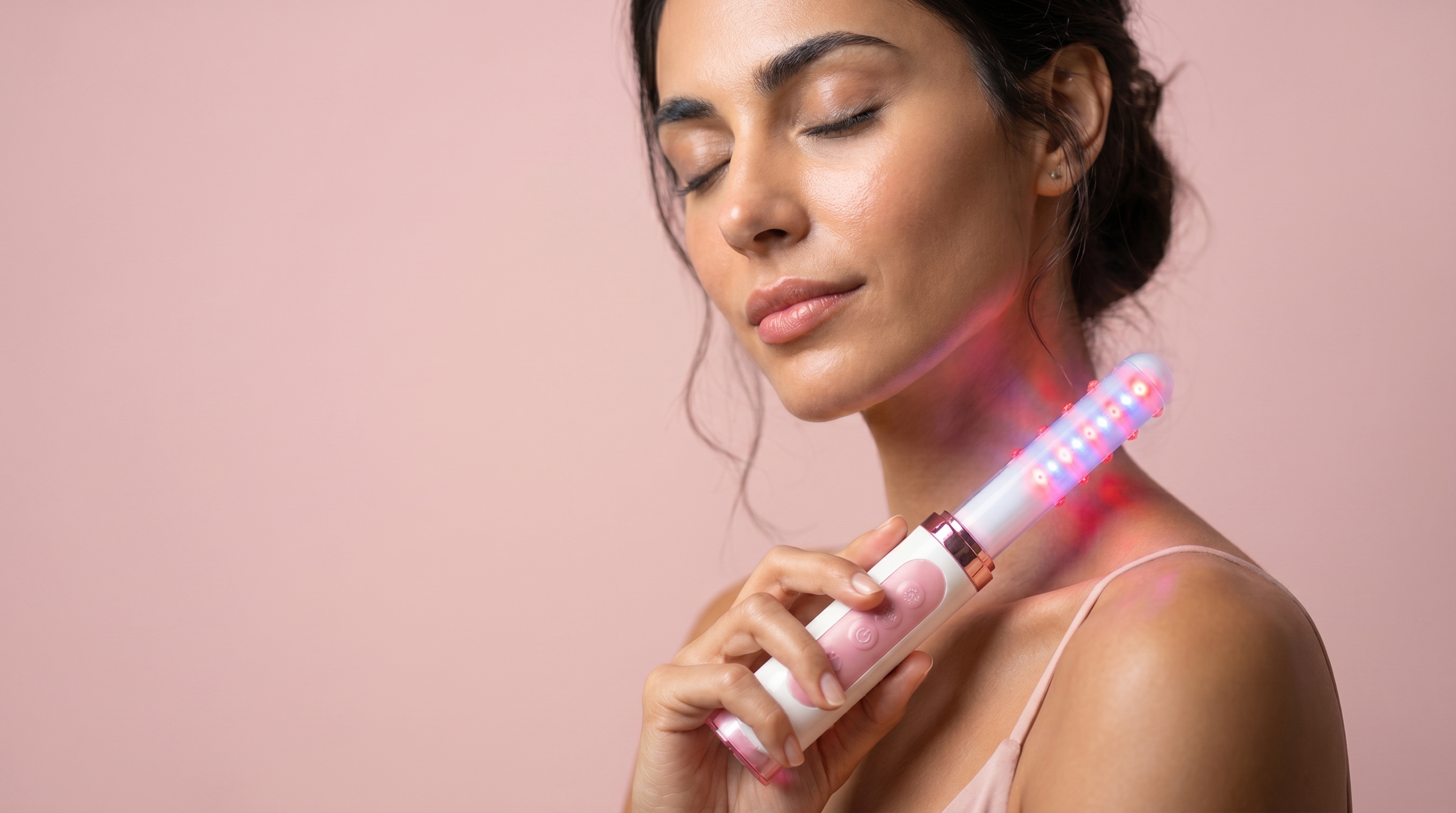
Two scientifically relevant wavelengths interact with two distinct biological layers — the microbial environment and the tissue itself. No chemistry. Calm physics, designed for the intimacy of home.

01Principle

Light meets biology

Specific wavelengths of light interact with light-sensitive molecules in cells and microorganisms — a biological signal, not just illumination.

02Blue biohygiene

0

/ NM

Blue light biohygiene

Selected blue-light wavelengths can interact with photosensitive molecules in certain microorganisms, supporting microbial balance and intimate freshness.

Red light photobiomodulation

Red light interacts with mitochondrial and nitric oxide pathways, supporting cellular energy, microcirculation, and tissue vitality.

Red photobiomodulation03

0

/ NM

04Home ritual

A simple home ritual

A short, calm, discreet protocol — designed for the privacy and dignity of home, used consistently over time.

How it works

Two layers. One ritual.

Blue light supports the microbial environment. Red light supports the tissue and cellular environment. Together they create a deeper kind of intimate care.

Spectrum

Two biological layers.
One intimate system.

Each wavelength is selected for a specific biological role. Together they bring blue biohygiene and red photobiomodulation into one elegant home ritual.

650 nm
400 nm500 nm600 nm700 nm800 nm

Visible spectrum

Red light
0/ NM

Tissue & cellular vitality

Red light photobiomodulation interacts with mitochondrial and nitric oxide pathways, supporting cellular energy, tissue oxygenation, mucosal vitality, microcirculation, and natural recovery pathways.

  • Mucosal vitalityRed light photobiomodulation supports tissue oxygenation and mucosal comfort.
  • Cellular energyRed wavelengths interact with mitochondrial pathways and ATP-related metabolism.
  • Postpartum tissue supportRed light supports natural recovery pathways once cleared by your clinician.
  • Through hormonal changeRed light photobiomodulation supports mucosal vitality during perimenopause and menopause.
Wavelength650 nm

What it supports

  • Mitochondrial signaling0%
  • Local microcirculation0%
  • Mucosal vitality0%
Evidence

Built on light biology.Refined for intimate care.

Photobiomodulation and antimicrobial blue-light research are well-documented fields. MyVibe.doctor brings that science into a discreet, elegant home device — the references below are for educational context.
Editorial science portrait
FEATURED STUDY662 nm

Lanzafame et al. (2019)

· Mucosal vitality through hormonal change

Research suggests red-light photobiomodulation can support mucosal vitality and comfort during the genitourinary changes associated with menopause.

0+

Peer-reviewed research areas

0+

Decades of light-biology research

0 layers

Microbial + tissue

Peer-reviewed publicationRead on PubMed
10 / 10 STUDIES
650–660 nmPEER

Wu et al. (2025)

· Vaginal comfort & local circulation

Low-level light therapy has been studied for vaginal comfort, local circulation, and tissue support over multi-week protocols.

Read on PubMed
660 nmPEER

De Oliveira Santos et al. (2012)

· Tissue recovery support

Red wavelengths are studied for their role in supporting natural tissue recovery pathways and local microcirculation.

Read on PubMed
660 nmPEER

Antonio et al. (2025)

· Local discomfort

Combined red-spectrum light is studied for relevance to chronic local discomfort, used alongside clinical care.

Read on PubMed
650–660 nmPEER

Zipper et al. (2021)

· Photobiomodulation in pelvic tissue

Photobiomodulation has been studied in pelvic tissue for its effects on cellular energy and tissue resilience.

Read on PubMed
460 nmPEER

Wang et al. (2018)

· Antimicrobial blue light

Selected blue-light wavelengths are studied for their antimicrobial potential against common microorganisms in vitro.

Read on PubMed
460–470 nmPEER

Bapat et al. (2021)

· Biofilm-related research

Blue light at antimicrobial wavelengths is studied for its interaction with biofilm-related structures.

Read on PubMed
470 nmPEER

Enwemeka et al. (2009)

· Antimicrobial-resistant organisms

Blue light has been studied for its antimicrobial potential including against antibiotic-resistant bacterial strains.

Read on PubMed
465 nmPEER

Ashkenazi et al. (2003)

· Bactericidal effects in vitro

Blue-spectrum LED light has been studied for bactericidal effects in laboratory settings.

Read on PubMed
460 nmPEER

Biondo et al. (2025)

· Recurrent microbial imbalance

Blue-light protocols are studied as adjuncts to standard care in cases of recurrent microbial imbalance.

Read on PubMed
9 STUDIES · SCROLL
How it differs

A different layer of
intimate care..

MyVibe.doctor is not a replacement for medical care. It is a new layer — a science-based home ritual that complements other intimate-care choices.

MyVibe.doctor
0/ 8
Hormonal therapy
0/ 8
Antibiotics
0/ 8
Probiotics
0/ 8
QualityMyVibe.doctorHormonal therapyAntibioticsProbiotics
Non-chemical, non-thermal
Designed for at-home ritual
Two biological layers (microbial + tissue)
Hormone-free
Non-invasive
Discreet and private
Long-term routine
Complements clinical care
YesPartiallyNo
Discover the technology